Why Accounting Shouldn’t Be the Last Embedded Feature You Add

Every embedded fintech capability eventually writes to the books, which is why the ledger belongs near the start of your roadmap
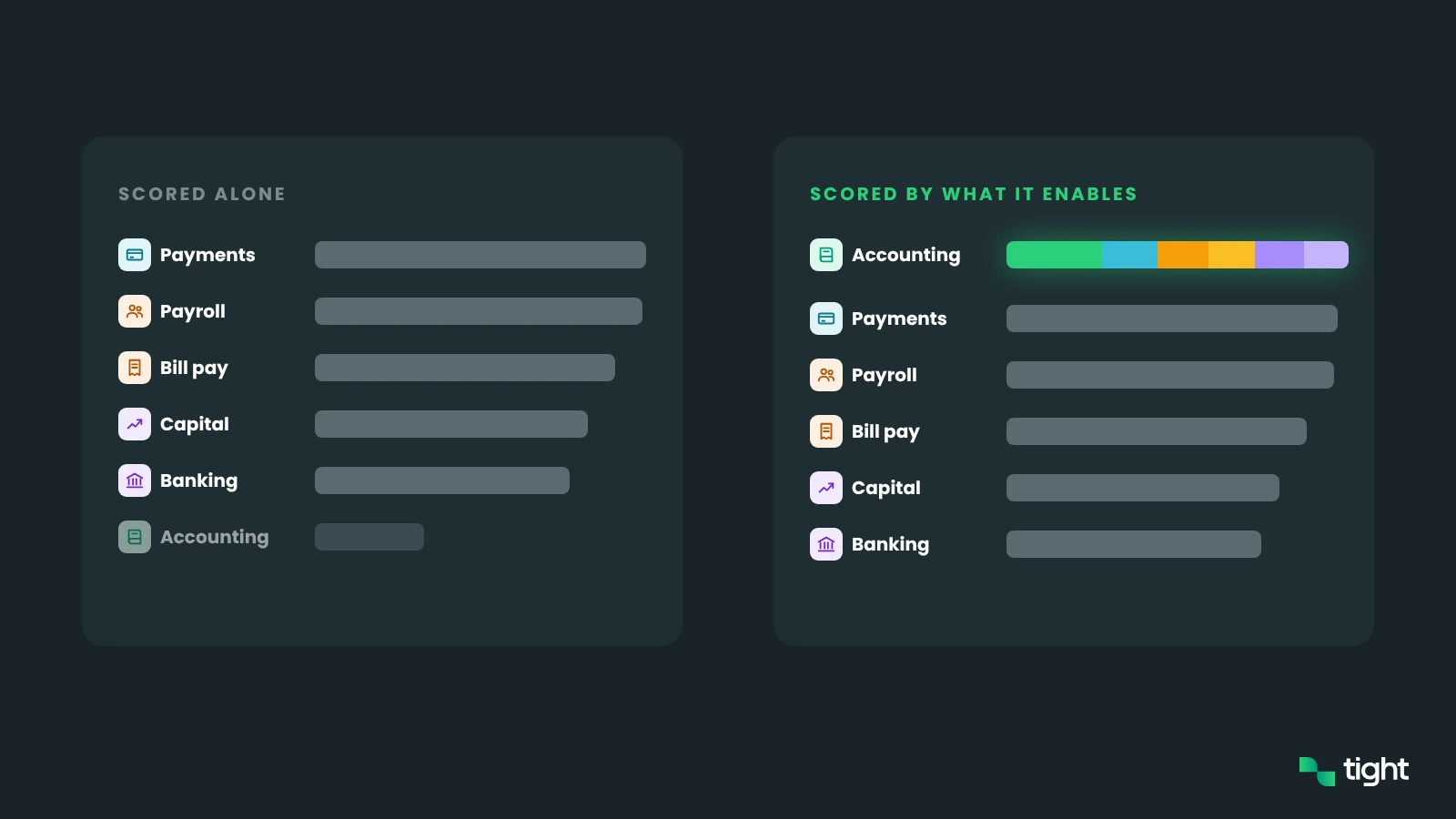
Most SaaS product teams prioritize their roadmaps one feature at a time. Whether they use the RICE framework, a value-versus-effort grid, or a running tally of customer requests, each potential feature or embedded capability is usually scored on its own merits, including how many customers want it, how much it moves the business, and how hard it is to build.
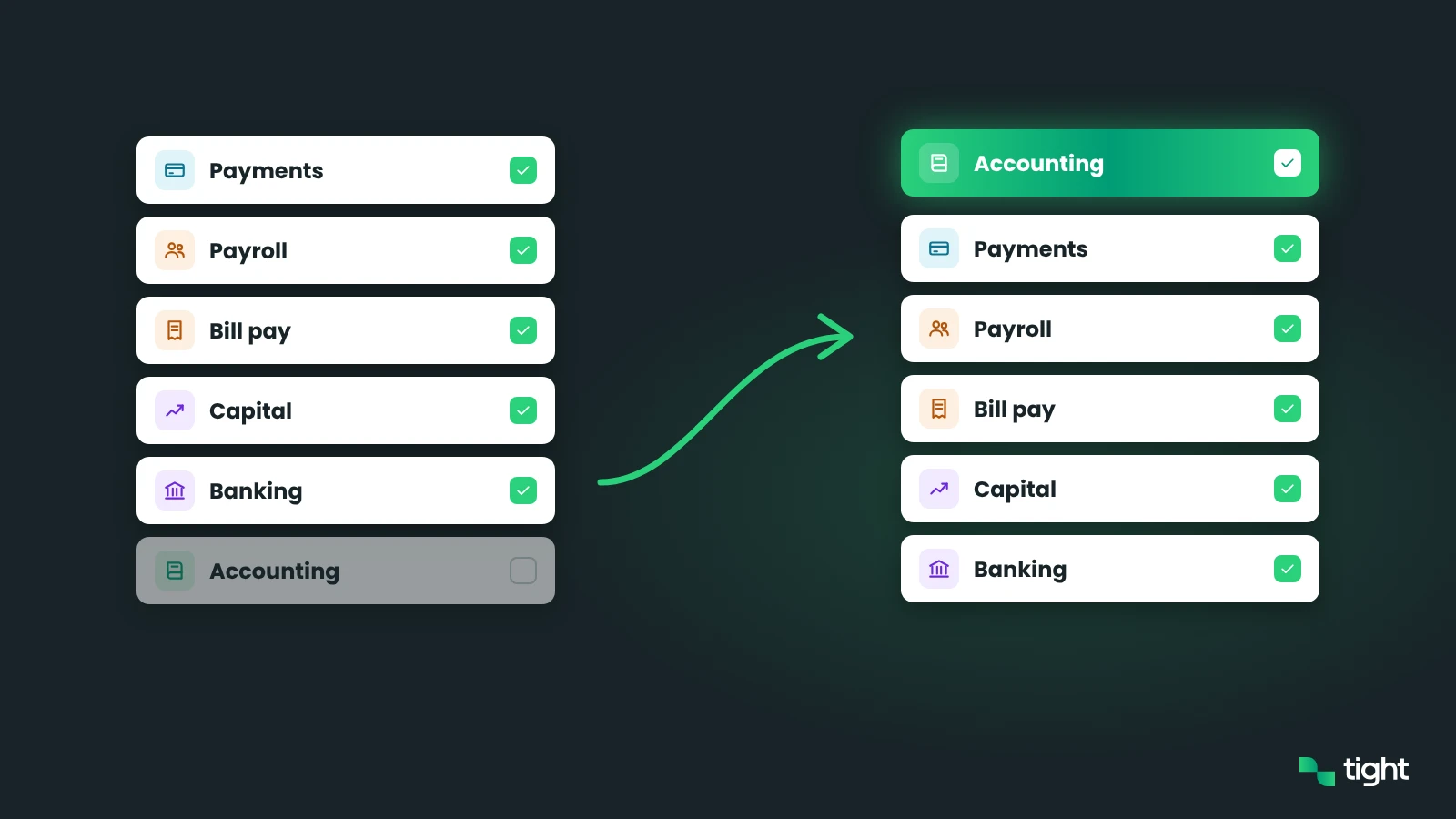
Run embedded accounting through that process, and it rarely wins. Payments, payroll, and bill pay all score higher, so accounting is deprioritized or handed off to a QuickBooks or Xero integration.
The trouble is, the value of embedded accounting doesn’t show up in its own score—it shows up in every feature you build after it. Each one of those features moves money, and that money has to be recorded and reconciled in the books. If you score accounting by what it enables for the rest of the roadmap, it jumps to the top of the list.
Getting that order right is one of the first practical steps in moving from point solutions to a full financial OS.
Why Accounting Loses With RICE
RICE is a prioritization model developed by Intercom, and many product teams use it to decide what to build next. It offers a useful lens here because its four criteria line up closely with the reasons SaaS teams give for delaying an accounting build. Even if your team uses a different model, the same logic likely applies.
RICE scores each new feature on reach (R), impact (I), confidence (C), and effort (E). Accounting often comes up short on all four, because each criterion measures it in isolation.
Reach: Customers Don’t Ask for Accounting by Name
Small business owners don’t typically ask their SaaS providers for a general ledger. Instead, they ask why a given deposit doesn’t match their sales, how much they made last month, or what they owe this week. Those questions get logged as support tickets, so the need never registers as a feature request—even if a real-time embedded accounting layer would solve it.
Impact: It Looks Like Reporting
On its own, accounting looks like a back-office tool that produces statements. Its real impact shows up elsewhere—in payouts that reconcile themselves, payroll that records its full cost, and financing offers based on the whole business. A feature-by-feature score credits none of that to accounting.
Confidence: Customers Already Have Something Running
Many SMBs already use a third-party system like QuickBooks or Xero, or work with a bookkeeper, so their accounting needs seem covered. They aren’t. QuickBooks and Xero work well as standalone tools, but a third-party integration only syncs after the fact, meaning their financial data can lag behind reality. On top of that, each new feature requires its own sync, and your platform still has no ledger of its own.
Bookkeepers don’t necessarily solve the problem, either. Many business owners handle their own books, and those who don’t still need clean, reconciled data to hand off. A connected ledger makes sure everyone is working from a real-time view of the business, and it can turn bookkeepers into a source of growth for your platform.
Thinking about switching from a QuickBooks or Xero integration to embedded accounting? We cover the process in detail in our migration guide
Effort: It Sounds Like a Big Lift
Building a general ledger, reconciliation engine, and financial reporting system in-house is a real project, which is the main reason many teams wait on accounting. Embedding accounting through an API, however, takes most of that work off the table. You own the experience, while the provider runs the infrastructure. Some platforms have even gone live in a single day. Our build vs. buy guide shows what you can expect from each approach and how to make the right choice for your team.
Each of these considerations makes sense on its own, but none accounts for the true cost of waiting.
Waiting on Accounting Builds Up Debt
Engineers know about technical debt: shortcuts that save time now but cost more later. Adding accounting last creates the financial version of that problem. We call it reconciliation debt: every money-moving feature you launch without a shared ledger underneath adds transactions that someone will eventually have to match, categorize, and record by hand.
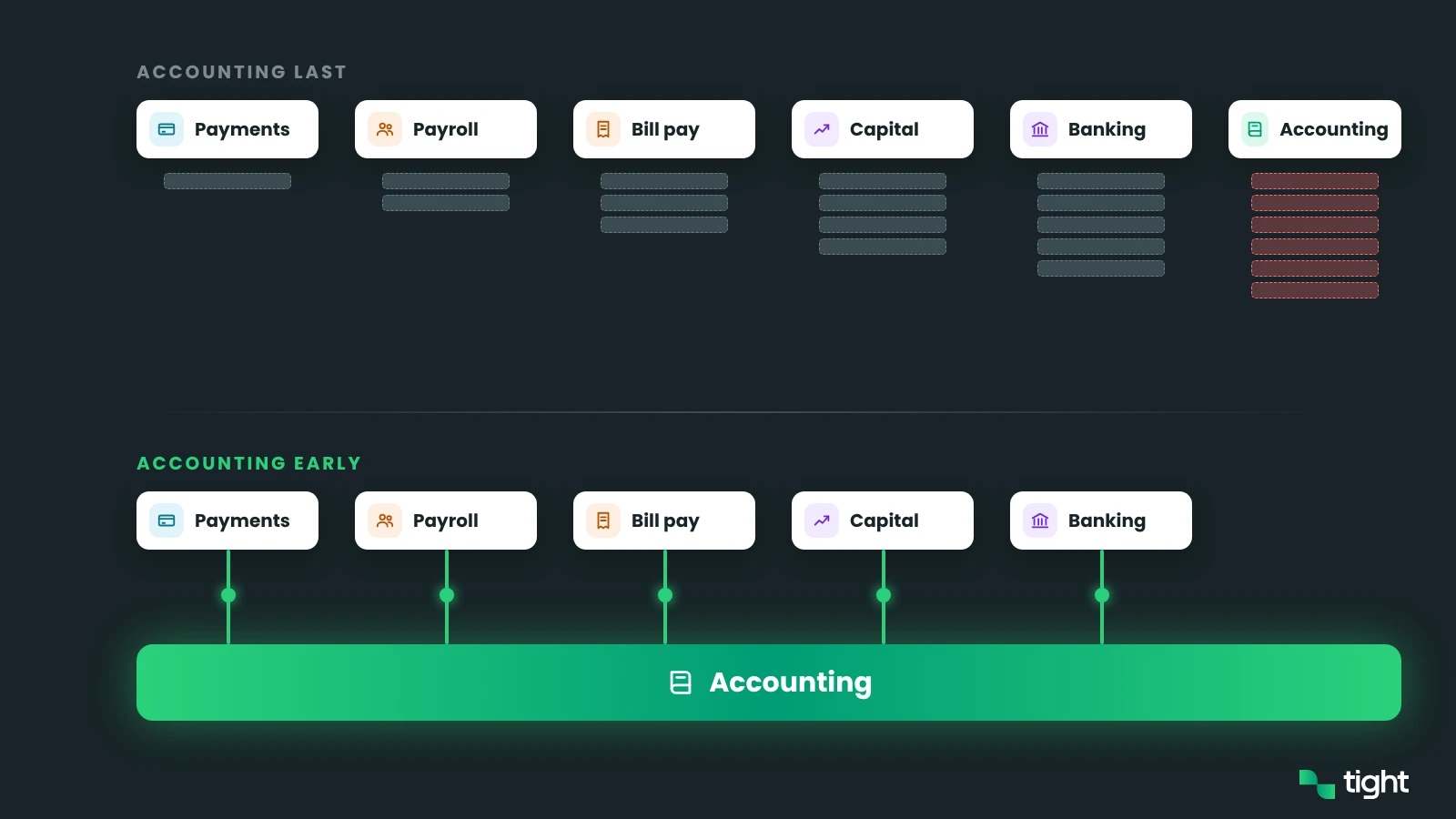
Reconciliation debt builds up in three ways:
History You Have to Backfill
When accounting finally launches, its first job is cleanup. Months of payouts, payroll runs, bills, and transfers sit in separate systems, each in its own format. Before customers can trust their first P&L, all of it has to be imported and reconciled.
Integrations That Have to Be Rebuilt
Features built before the ledger send only the information they need. A payments integration might pass along net payouts, and payroll might record a single withdrawal. Getting the details the books require (like gross sales, fees, withholdings, and employer costs) means reworking integrations that have already shipped. Choosing the right data layer early on avoids that rework.
Features You Can’t Yet Offer
There are some features you just can’t build without a common ledger—like cash-flow forecasts, profit by job or location, financing based on more than sales, and AI assistants that can answer basic real-time questions like “How is my business doing?” Each of those capabilities relies on a complete, reconciled record. Until you have it, your platform sees pieces of each customer’s finances, but not a whole picture it can build on.
What Changes When Accounting Comes Early
Flip the order, and every feature you add after accounting is already connected. Each one makes the ledger more complete, and a more complete ledger makes the next feature more useful. Here’s what that looks like on launch day:
The benefits stack. For example, if a field-service platform adds payroll after the ledger, business owners can see their labor cost per job from the first pay run, then use it to price the next one. If you’re already running payroll, there are good reasons to embed accounting next.
Where Accounting Belongs on Your Roadmap
Of course, early doesn’t have to mean first. Payments tools usually lead the embedded fintech roadmap because they sit closest to the core workflow, and accounting is the natural next step.
A good rule of thumb is to get the ledger in place before you build in your second money-moving feature. Once two or more features move money through separate systems, reconciliation debt really starts to compound.
You can expect your fintech roadmap to keep evolving as customers ask for new products and features. What won’t change is the fact that nearly every one of them moves money, and that money has to land somewhere. Put the ledger in place early, and every feature you add later builds on it instead of just adding to the cleanup.
How Tight Can Help
Tight gives SaaS platforms the accounting foundation they need without the build. It offers an embedded, fully white-labeled, AI-native ledger that every new feature can write to from day one. Transactions are reconciled continuously so that financials stay current—which means your platform can be ready for whatever experiences you’re building next.
To learn more, explore our embedded accounting API docs, or talk to our team to schedule a call.
Frequently Asked Questions (FAQs)
Why should accounting be at the front of the SaaS fintech roadmap?
Embedded accounting should be at the front of the SaaS fintech roadmap because most of its value shows up in the features built after it. Every embedded feature that moves money writes to the books. When accounting comes late or last, those features build up a backlog of unreconciled activity across separate systems. Adding it early means that every later feature connects to a common ledger right from launch.
When should a SaaS platform add embedded accounting?
Ideally, a SaaS platform should add embedded accounting before its second money-moving feature. For many platforms, that means right after payments, so payroll, bill pay, capital, and banking each connect to the books as they launch.
What is reconciliation debt?
Reconciliation debt is the backlog of unmatched, uncategorized transactions that builds up when a platform adds money-moving features without a shared ledger. Like technical debt, it grows with each feature and has to be paid down later, usually when accounting finally launches.
Can a platform embed accounting if its customers already use QuickBooks or Xero?
Yes, a platform can embed accounting if customers already use QuickBooks or Xero. Customers can move their historical data into an embedded ledger, and platforms can roll the transition out in phases so it doesn’t disrupt ongoing bookkeeping. We cover the full process in our migration guide.
Does embedding accounting early slow down the rest of the roadmap?
It doesn’t have to. Embedding accounting through an API like Tight’s lets platforms launch it without building and maintaining the accounting infrastructure themselves. Each feature added afterward also launches with its accounting already connected, which removes the reconciliation work that would otherwise follow.

Disclaimer: The information contained in this document is provided for informational purposes only and should not be construed as financial or tax advice. It is not intended to be a substitute for obtaining accounting or other financial advice from an appropriate financial adviser or for the purpose of avoiding U.S. Federal, state or local tax payments and penalties.
Ready to Get Started?
Fill out the form below to set up a call.